Thursday, July 06, 2006

Under-discovered Gems in our National Park System


What could be more American than our National Park Service? People everywhere express interest in exploring these symbols of our national heritage. The parks range from large and well-known, like Yosemite and Zion, to small and obscure, like The Golden Spike National Historical Park and Moore’s Creek National Battlefield.

The parks are divided into several categories including National Parks, National Historic Parks, National Monuments, National Seashores and more. The difference is not just the significance of the park, but also the funding and, therefore, staffing and amenities of each location. In all, there are over 400 locations maintained by the National Park Service and they do a great job keeping everything maintained, accessible and enjoyable for the millions of annual visitors. The parks are truly one of the gems of our tax-supported services.

Each park, monument, seashore and more was designated due to some unique characteristic worth preserving and showcasing. From the intricate lacework of Wind Cave in South Dakota, to the fragile eco-system of the Florida Everglades, the park rangers are well informed and eagerly teach visitors about their park. The Junior Ranger program for kids in some of the larger parks is better than a year of science and history back home.

So what are some of these lesser known locations of special significance? Here are three that you might want to include in your next trip.

Big Bend National Park – Located in far south Texas, this park is visited by less than a million people a year and stretches over 800,000 acres, with three distinct eco-systems. The Chisos Mountains loom from most every vantage point in the park. In the spring, the desert portion of the park is alive with wild flowers and animals of every description. And finally, the canyons of the Rio Grande make a spectacular trip via rubber raft or canoe. The Santa Elena canyon is spectacular with the canyon walls rising 1500 feet on one side to Mexico and the same distance on the other in the US. The nearby town of Lajitas (outside the park) boasts the only “international” golf course in the US when one hole has an optional green across the canyon to Mexico! Retrieving your ball and scoring the hole is difficult since there is no physical connection to the green.

Little Bighorn National Monument – This Park gets our vote for the best ranger talk. The site of Custer’s last stand presides over the valley below with such visual splendor that one can easily imagine the Indians camped below and the obedient men under the direction of General Custer being led to their slaughter. As the wind blows over the site, the rangers do an incredible job of setting the mood, the facts and the story of Little Bighorn. Armed with the knowledge of the battle, an audio tour is available as you head out through the actual battlefield.

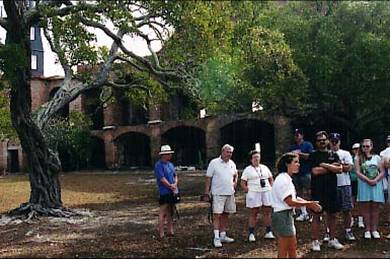
Dry Tortugas National Park – On of the least accessible of all our parks is Dry Tortugas, 67 miles off the tip of Key West. Best reached by several companies who offer “fast Cat” service to the island, the history and the remains of Fort Jefferson mix with the wonderful snorkeling to make for a great day trip, or a multi-day stay for the adventurous, since there are no improved campsites on the island, no lodging, no bathhouses and no drinking water available. Fort Jefferson dates to the early 1800s, when it was constructed to protect the Gulf of Mexico. This is one of the parks that has fallen victim to the loss of Park Rangers, partly due to the desolate conditions there. Fortunately, our guide for the boat trip had become knowledgeable about the history of the fort and provided excellent “ranger” descriptions for our group.

The National Parks website at http://www.nps.gov/ is a treasure trove of information, whether your visit is to a famous or not-so-famous park. If your goal is to visit many of the national parks, be sure to pick-up your personal “Passport” at your first park – a clever and unique way to catalog your visits. The National Parks Pass is a bargain at $50 a year for unlimited access to the parks with a 50% discounts on use fees within the park. The Golden Age passport is available to those 62 and older and is good for a lifetime. Our disabled citizens are also entitled to Golden Access Passes, regardless of age. See the website for complete details.

Sunday, June 18, 2006

Travel Technology Options

One of the questions that comes up most frequently is what type of internet connectivity should I have for our trip? So, here is a quick review of the basic ways to access the internet in a mobile connection (not at a fixed land base (ie DSL or cable TV internet)

· Dial-up - slow, but can access from any telephone line - just plug in and dial. Some carriers provide lots of local dial up numbers (AT&T has over 400!) and most also provide some 800 service for a fee. This is good to have as a back-up service when you can't access anything else. AT&T provides such a service for $5.95 a month + $.99 an hour when you need to use it. I'm sure others have similar services.

· Cellular Modem - slow, but using an adaptor kit of some type (called a modem kit) you can access any place you have cell coverage. Unless a particular company has put restrictions on it, you can access the internet from ANY cell company’s service, regardless of who your carrier is. You have a physical connection from your cell phone to your PC.

· Cellular Data Service - this has no connection to your cellular phone or cellular phone carrier. You may have the same carrier for both, but it is not necessary. Faster than the above options, you have a card in your PC that accesses the internet directly. You don't even have to HAVE cell service to have this. Totally separate. This service costs about $40-60 a month. Unlimited service. No minutes to worry about. The coverage area for the carrier who provides the card/service to you has no bearing on where you can connect. You can connect ANYPLACE you can get a cell signal -- regardless of carrier who is providing the signal. Now, you may get varying speeds depending upon the carrier, but cellular signal + data internet service card = connection. Even driving along.

· Wi-fi Service The newest and the best value. Good speed, easy to use and becoming very easy to find. Must have a wi-fi card in your PC - virtually all new PC's have them, and many older ones can be retrofitted. Costs for service range from "free" (the location is paying for it - like Starbucks, libraries, etc.) to $30-40 a month, depending upon the situation. You can buy service for a few dollars for a day (like in an airport) to subscription services like through SBC -- but usually restricted to that company’s Hot spots.

· Satellite - Expensive to buy and to have service. Fast, but must be able to get your satellite link-up (problem in trees, etc.) but really great service. There are a couple of major providers. I've never used this, so don't know as much about it. One of our subscribers, Daniel Bray, is an expert. Can only use it when satellite is up - so can't be used driving down the highway. Cellular data service can be used driving along (please, don't try to drive and use! -- I've seen that, believe it or not! -- in LA, where else!)

Saturday, June 10, 2006

Authors Win National Book Award


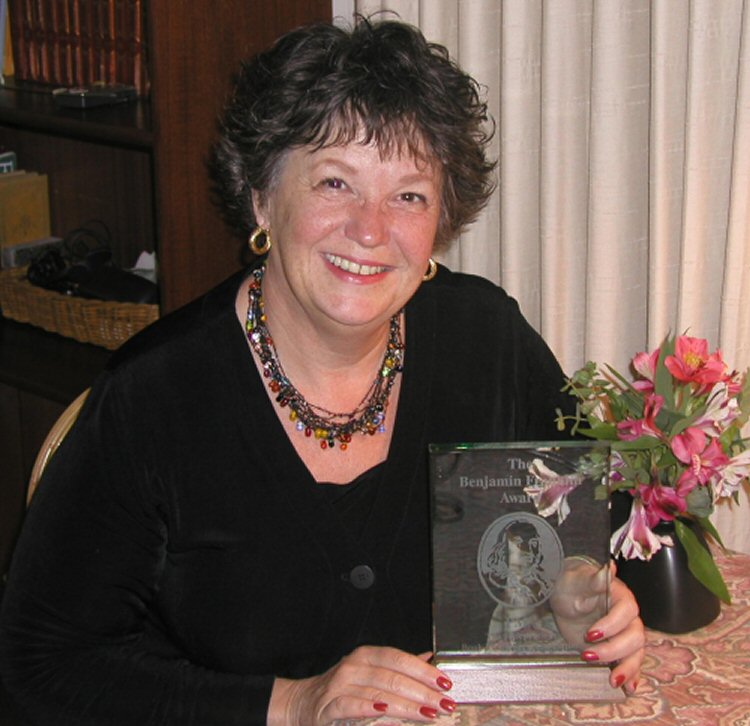
Live Your Road Trip Dream, by Oregon authors Phil and Carol White, won a coveted Benjamin Franklin Award at a Washington, DC ceremony in conjunction with Book Expo America.

PMA, the Independent Book Publishers Association honored the Whites for their award in the category of Marketing Excellence and Innovation for 2005. Live Your Road Trip Dream was previously selected as a Finalist in the 2004 ForeWord Magazine competition for Book of the Year – Travel.

Judged by a panel of book industry experts including buyers at wholesale and retail levels, librarians, book critics, design experts and independent publishing consultants, these books have been scrutinized by individuals involved in the very markets in which the books are competing.

RLI Press published the Whites’ book in July, 2004. It is currently in its second printing and is selling well at AAA, Camping World, book stores, Amazon.com and at their own website, http://www.roadtripdream.com/ among other locations.

Live Your Road Trip Dream is a “how-to” book to help people figure out how to extricate themselves from their everyday lives in order to go travel for an extended period – and do it for the same cost as staying home. It has been featured in articles ranging from the Associated Press to local papers like Lifestyles Northwest where they were the cover feature. Over 100 newspapers and magazines have told their story. In addition, the Whites have been heard on radio programs and on television. If you enter the book’s name in Google, you will find it in over 12,000 locations on the internet.

Carol White was in Washington, DC to speak at a conference when the winner was announced. She said, “I just couldn’t believe it, out of all the independently published books, they chose ours for marketing excellence. I was speechless, which doesn’t happen to me very often!” When asked how she did it, Carol commented, “If you have a good product with a strong market niche and a good marketing plan that is well-executed, there is a good chance that you will be successful. With nearly 200,000 new titles each year, it is getting increasingly difficult for good small presses to rise above all the ‘noise’ and find their audience.” Apparently the Whites have figured it out, while not only living their road trip dream, but also their publishing dream.

About the Benjamin Franklin Awards™

Named in honor of America’s most cherished publisher and printer, the Benjamin Franklin Award recognizes excellence in independent publishing. A panel of nearly 180 judges from throughout the publishing industry weighted and evaluated more than 1,700 submissions in 53 categories to create the list of more than 159 finalists for 2005 publishing year. Publishers large and small from across the nation, Canada and Mexico competed for the coveted awards.

PMA, with more than 4,200 members, is the largest non-profit trade association representing independent publishers. For a compete listing of finalists and to view the award winners in each category, go to the PMA website at
http://www.pma-online.org/

Friday, May 12, 2006

Wanna save on gas? Ditch your Starbucks.


If you’ve given up the idea of summer vacation road trip, think again. Regardless of the gas prices, fuel is typically only the forth largest expense on a trip behind lodging, food, and vehicle cost and maintenance says author Carol White of Live Your Trip Dream. “It’s really a much smaller expense than people think and it’s certainly not worth canceling your dream vacation over.”

Still, it’s going to cost more this year than it has in years prior to hit the road. White suggests pouring the Starbucks and other non-essentials in your tank instead, “You’d be amazed how much we all spend on the extras we don’t really need. The small invisible stuff really adds up but if a family really wants to take a road trip and needs to budget extra for gas, there are a few great ways they can do this.”

If you’ve always dreamed of hitting the road for a family road trip here are a few quick non-essentials you can easily cut:

  • Forgo the daily Starbucks latte, have a regular coffee instead
  • Plan eating in more, make dining out a treat, not a daily occurrence
  • Come on now, be honest. Are you really using all those cable channels? Cutting just one of them could get you a tank of gas a month. Wait till Big Love comes out on DVD and rent it
  • Be adventurous! Get your hotels on Priceline or Hotwire, you might be surprised what you get! Many of their rooms are four star hotels.

According to a study done by PKF for the Recreational Vehicle Industry Association (RVIA), fuel prices would need to triple to make that option more expensive for a family of four than other forms of travel. Of course, you don’t have to have an RV to do a road trip, but they are a great choice for those summer vacations.

Whether you decide to cut one expense or all of them, White says don’t let high gas prices keep you from spending time on vacation. U.S. workers are notorious for not taking the vacations they are entitled to, don’t let the gas pump steal what’s rightfully yours: some time away.”

Monday, April 24, 2006

What not to do on your Summer Vacation!

Just in time to get everyone excited about the summer family vacation season, the movie “RV” comes to town www.sonypictures.com/movies/rv/ .

Poor Bob Munro (Robin Williams) is just trying to get some family bonding time with the kids before they grow up and are gone. But, like many families, he dives into the preparations without a clear vision of the task – especially tackling an RV without some guidance (or apparently, common sense!).

RV trips are great for family bonding, whether you are an experienced RVer or just starting out. The Recreational Vehicle Industry Association (RVIA) has lots of great ideas and help at their site www.gorving.com . If only the Munros had known about this source of information. Whether you need a CD on the basics or a list of campgrounds to get you started, RVIA can help you avoid the pitfalls that the Munros suffered.

According to RVIA, there are over 30 million RV enthusiasts in the country, with over 8 million owning an RV. Who is the most RVing age group? The baby boomers, of course, with over 9% of them owning RVs. Today’s typical RV owner is 49 years old, married, with an annual household income of $68,000 – much like the family in the movie. Whether you want to rent an RV like the Munros did, or are looking to purchase one, there is something for every budget with purchases starting at under $10,000.

Once you’ve gotten your vehicle lined up, you’ll surely need some additional tips and hints to make your vacation enjoyable. Phil and Carol White share lots of tips for road trippers on their website, www.roadtripdream.com . The website has a television clip of them sharing their experiences, a complete budget worksheet (.xls format) for both long and short trips, information on their award-winning book, “Live Your Road Trip Dream” and much more.

Carol offers some tips for your family summer vacation.

· Instead of springing the trip on your family like Bob Munro did, enlist their help in the planning. Almost every age can help – plan out your route, mark the maps, gather information on the internet, get a travel guide or two, plan your meals – these are all things that the whole family can get involved in.
· Don’t over plan your trip. Be sure to leave room in your itinerary for spontaneous adventures – or problems along the way. A little planning goes a long way. Too much planning kills to joy of exploration.
· Consider leaving the electronics at home. Pack the games, sports equipment and hiking maps instead. Families spend so much time in solitary pursuits today, like personal music devices, DVRs, computers, game systems, and more – why not leave them home and explore other options on your vacation.
· If you are taking teenagers along, give them each the responsibility to be in charge of one day of the vacation. They get plan the meals (hold your breath!), be the tour guide on the activities, deal with tickets, money, transportation and other things that crop up during the day. A great experience for them.

So don’t let the hapless adventures of the Munro family scare you off. Do some homework, get everyone involved, and take off on your own adventure and bring back memories to last a lifetime.